
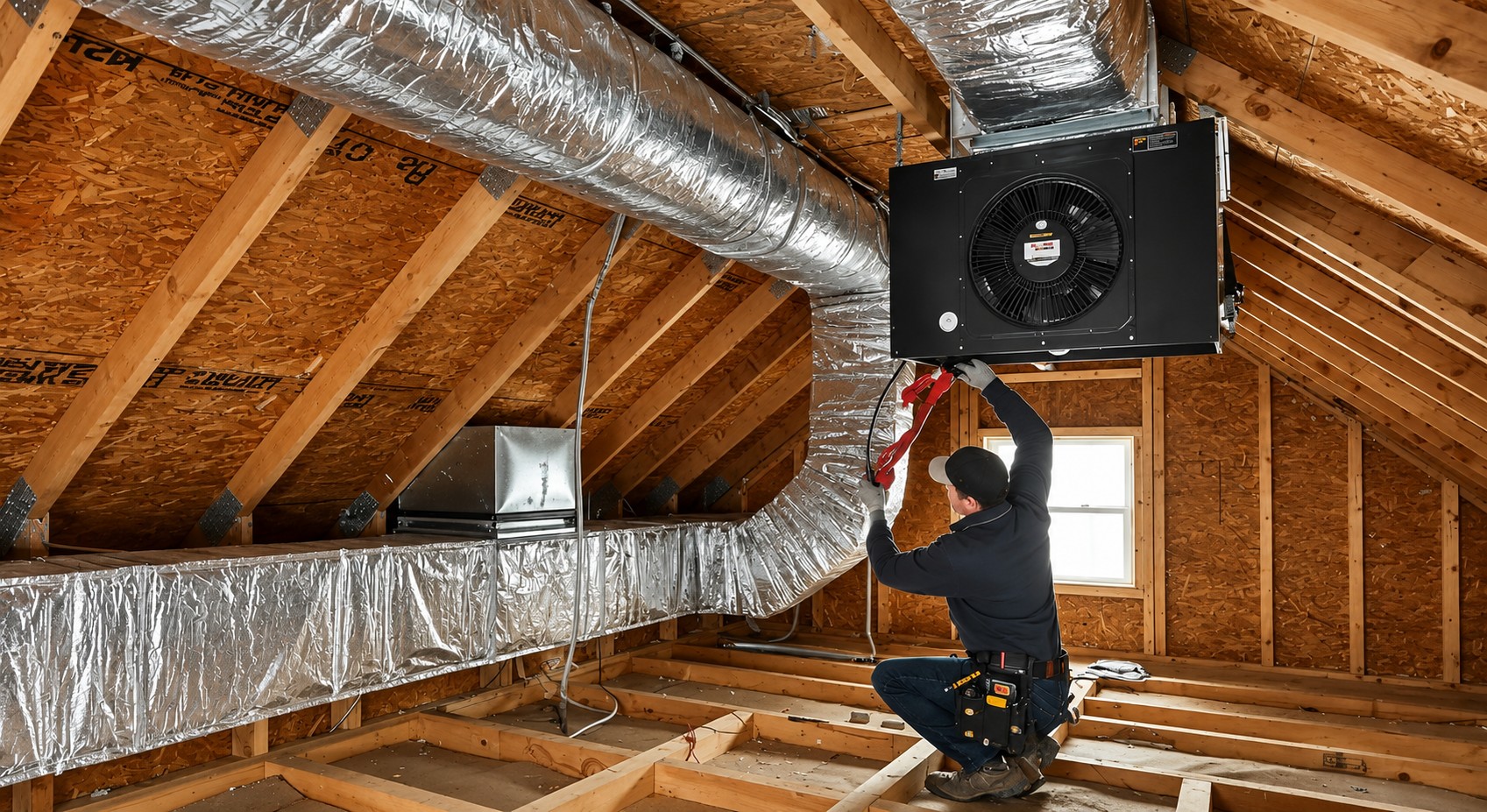
Could your home stay more comfortable on a summer evening without relying entirely on air conditioning? A whole house fan can move hot indoor air out and draw cooler outdoor air through open windows. Proper whole house fan installation in Central Valley requires more than mounting a fan in the ceiling.
What Does a Whole House Fan Do?
A whole house fan exhausts warm indoor air through the attic while pulling cooler outdoor air into the living space through open windows. The U.S. Department of Energy notes that whole house fans can provide ventilation cooling when outdoor conditions are cooler than indoors.
It is useful during cooler evenings and mornings, when outdoor air can flush accumulated heat from the home. Professional whole house fan installation in Central Valley makes sure the fan, wiring, and attic ventilation work together safely.
What Are the Benefits of Whole House Fan Installation?
The main advantage is straightforward: a whole house fan can help cool a home by using the temperature difference between indoors and outdoors.
Other practical benefits may include:
- Faster removal of hot, stale indoor air.
- Improved air movement throughout the home.
- Reduced reliance on air conditioning during suitable weather.
- Better overnight cooling.
Timing matters. A whole house fan should generally run when outdoor air is cooler than indoor air. When temperatures rise, windows should be closed and the fan turned off instead of drawing hotter air indoors.
Who Installs Whole House Fans in Central Valley?
A qualified electrician or electrical contractor experienced with whole house fan systems can handle electrical installation, controls, wiring, and connection to the home's power supply. An HVAC or ventilation professional may also be involved.
When choosing a whole house fan installer in Central Valley, ask whether the contractor will evaluate the complete installation rather than simply mount the equipment. A professional should consider:
- The required electrical circuit and controls.
- Available attic ventilation and exhaust pathways.
- The ceiling opening and structural clearance.
- Manufacturer installation requirements.
- Whether the existing structure can accommodate the selected model.
The Department of Energy recommends professional installation for proper sizing and safe operation.
How Should a Whole House Fan Be Installed?
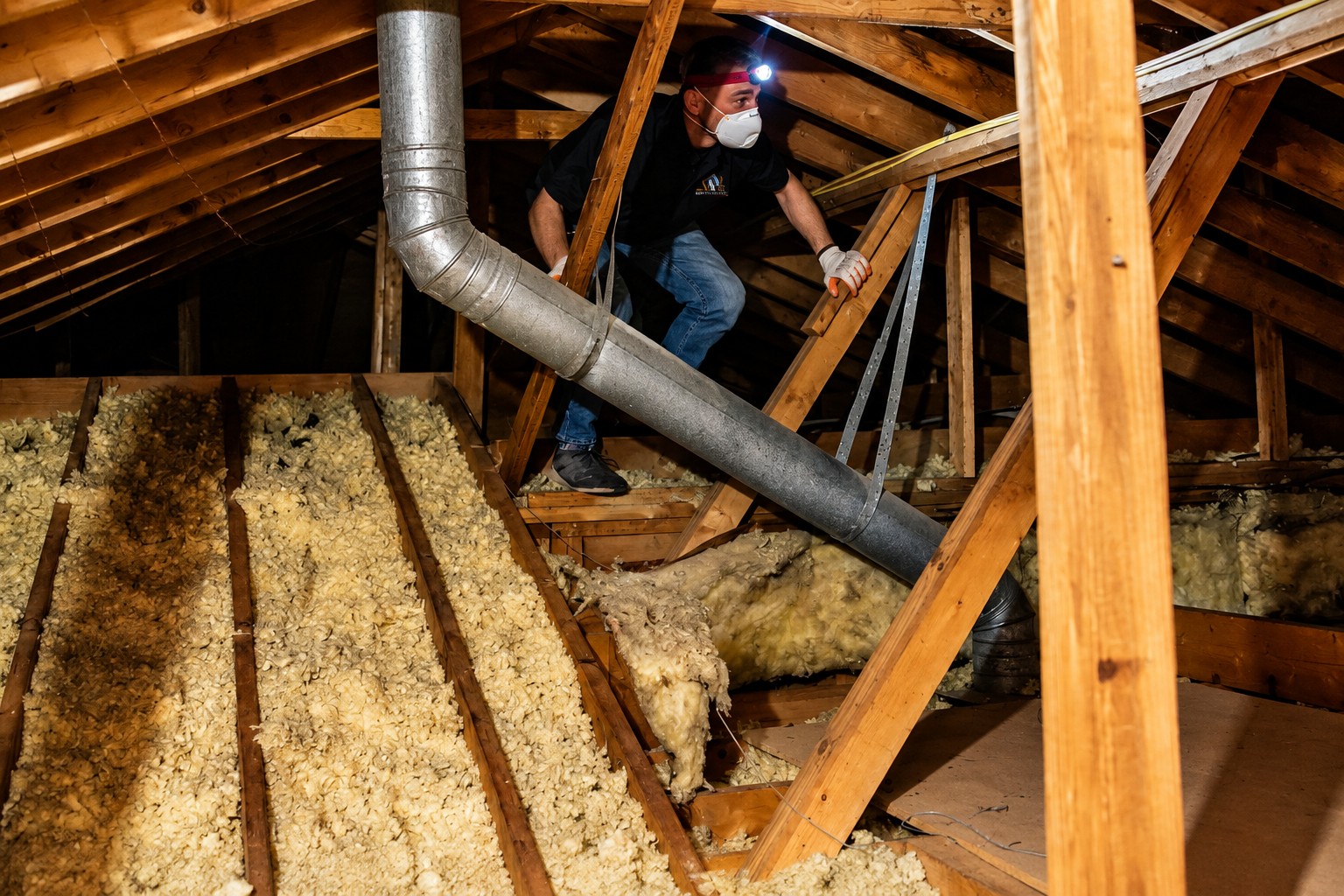
A sound installation begins with an assessment, not with cutting the ceiling. Professionals review the home's layout, attic configuration, electrical capacity, and manufacturer requirements.
The process may involve:
- Selecting an appropriate fan.
- Identifying a suitable ceiling location.
- Confirming sufficient attic ventilation.
- Installing the fan, controls, and electrical connections.
- Testing operation.
An adequate attic vent area is especially important. DOE guidance explains that manufacturers specify required vent areas, and insufficient ventilation may require additional openings.
When Does a Whole House Fan Need Repair or Replacement?
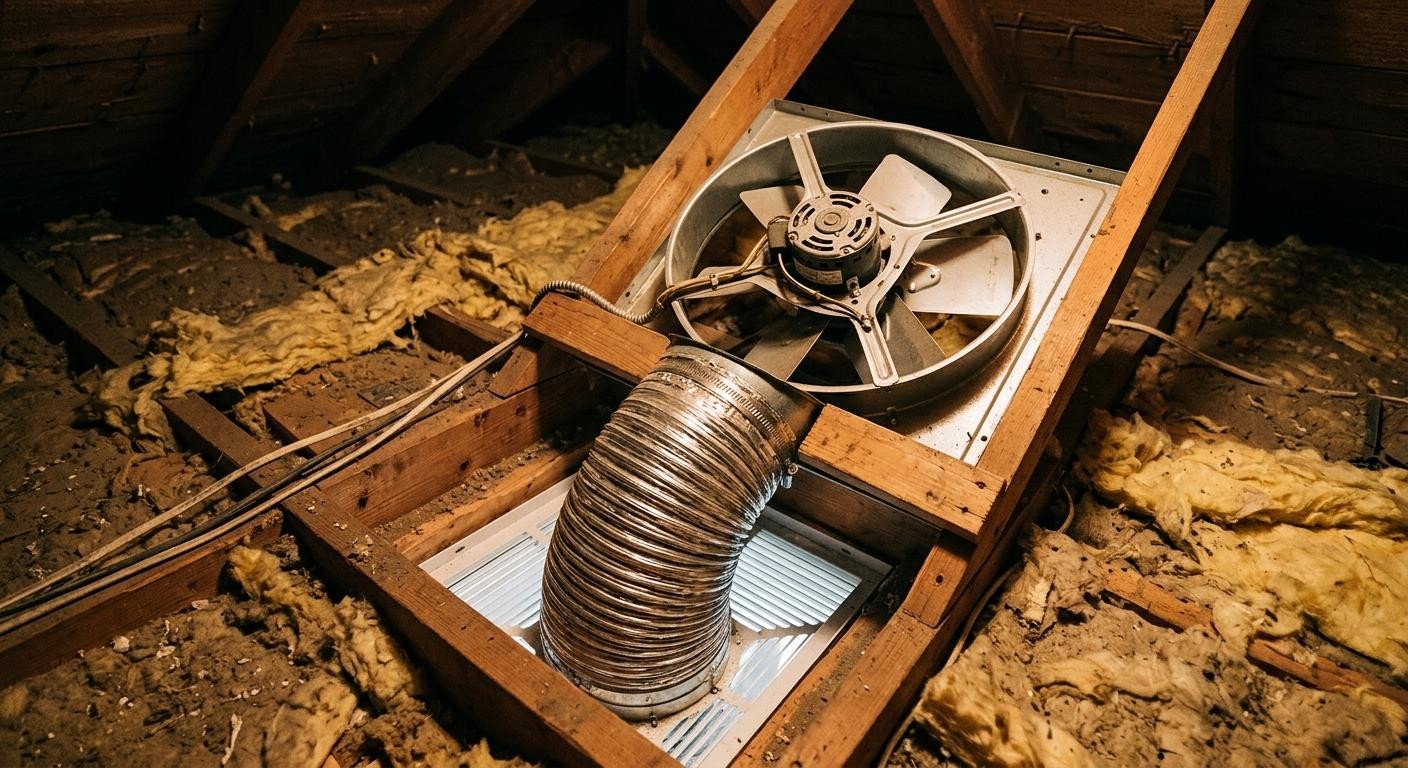
Like other mechanical equipment, a whole house fan can eventually develop problems. Unusual vibration, excessive noise, inconsistent operation, failure to start, or electrical issues should not be ignored.
If the system stops operating properly, seeking professional help for whole house fan repair in Central Valley can help identify whether the issue involves the motor, controls, wiring, mounting, or another component.
Replacement may be a better option when the equipment is extensively worn, replacement parts are unavailable, or the system no longer meets the home's cooling needs. In such cases, professional help with whole house fan replacement in Central Valley should include an assessment of the existing electrical and ventilation setup rather than simply replacing the fans.
| Consideration | Repair | Replacement |
|---|---|---|
| Equipment condition | Serviceable | Heavily worn |
| Main goal | Restore operation | Upgrade or renew system |
| Approach | Diagnose the fault | Reassess sizing and installation |
What Should Homeowners Consider Before Installation?
A whole house fan is not a substitute for every cooling or ventilation system. Outdoor temperature, humidity, air quality, window availability, insulation, and attic conditions all affect its usefulness.
For Central Valley homes, homeowners should watch outdoor dust, smoke, and other air-quality conditions. DOE guidance notes that natural ventilation should not be used when outdoor air quality is poor.
Electrical work also deserves careful attention. If you are already dealing with an electrical concern, our Emergency Electrician Services in Central Valley: When to Call for Help guide explains situations where prompt professional assistance may be appropriate.
Choosing the Right Installation Services
Good results depend on matching equipment to the home. Experienced professionals can evaluate electrical and attic conditions together, identify installation challenges, and explain proper operation.
Jack Surabian Electric provides whole house fan installation services in Central Valley and can help homeowners assess the electrical side of a whole house fan project. Its dedicated whole house fan service page provides additional information about professional installation.
For homeowners considering this cooling strategy, a site-specific evaluation is the best first step. Proper installation helps ensure the electrical and mechanical aspects are handled correctly.
Ready to improve your home's cooling and ventilation?
Contact Jack Surabian Electric to discuss your whole house fan installation needs and get professional guidance for your Central Valley home.
Key Takeaways
- Whole house fans can help remove hot indoor air and bring cooler outdoor air into the home when outdoor conditions are suitable.
- Professional whole house fan installation in Central Valley should account for electrical requirements, attic ventilation, ceiling clearance, and manufacturer specifications.
- A qualified whole house fan installer in Central Valley can evaluate the home's electrical and structural conditions before installation.
- Proper diagnosis can help determine whether whole house fan repair in Central Valley or replacement is the more practical solution.